Making smart choices
Most restaurant menus are designed backwards. A chef builds a dish they are proud of, prices it against what the competition down the road is charging, and arranges the card by the order a guest eats — starters, mains, desserts. Every one of those decisions is made on instinct or emotion, and not one of them is a financial decision. This is the single most expensive habit in the industry, and in Bali's crowded, fast-moving culinary market it is the difference between a concept that fills every night and still closes within eighteen months and one that builds durable margin. A menu is not a list of what the kitchen can cook. It is the primary financial instrument of the business, and it should be engineered with the same rigour a portfolio manager applies to an asset allocation.
The number that matters is gross profit, and the arithmetic is unforgiving. Gross profit on a dish is its selling price minus the cost of the ingredients that go into it, expressed as a percentage of the price. A 70%-plus gross profit target — the benchmark serious operators design toward — means food cost has to sit at or below roughly 30% of the menu price. That threshold is not achieved by pricing dishes higher and hoping guests absorb it; guests in a competitive market punish overpricing quickly. It is achieved by engineering the entire card so that the items guests actually order are the items the business makes money on, and by building the kitchen so those items can be produced consistently at the costed yield. True F&B sustainability is the balance of an exceptional guest experience against a food cost percentage held with discipline — and that balance is won in the design phase, not recovered in service.
The Blueprint for 70%+ Gross Profit Margins
Engineering a high-margin card is a technical process with three interlocking stages. Skip any one of them and the margin leaks back out. F&B menu development done properly treats all three as a single system, because the menu, the inventory, and the kitchen line are not separate problems — they are three views of the same profit equation.
The first stage is the menu engineering matrix, which is the diagnostic that ends the guesswork. Every item on the card is plotted on two axes: its popularity (how often it sells) and its contribution margin (the cash profit it throws off per plate, not merely its percentage). That produces four quadrants, and each one carries a specific instruction:
- Stars are high popularity and high margin, and the entire objective of the card is to build around them. These are the items that are both loved and profitable, and they should be positioned in the guest's natural eye path, described with the most confident language, and protected from any cost creep that would erode their margin. A menu's job is to sell more Stars, and everything else on the card exists to funnel demand toward them.
- Plough-horses are high popularity but low margin: the items guests love that make little money. These cannot simply be cut — removing a beloved dish drives guests away — so they are re-engineered instead: portion recalibrated, plate cost attacked through sourcing, or repositioned so a higher-margin alternative sits beside them as the easier choice.
- Puzzles are high margin but low popularity, profitable items that guests overlook. The fix here is merchandising, not deletion: rename, redescribe, reposition on the card, or have the service team recommend them, converting a hidden margin into a realised one.
- Dogs are low popularity and low margin, and they are dead weight that must be cut or radically reinvented. Every Dog on a card consumes menu real estate, adds an ingredient to inventory, and lengthens the prep list for no financial return. Removing Dogs is often the fastest single margin improvement available to an existing restaurant.
The second stage is ingredient cross-utilisation, and it is where food cost is genuinely controlled rather than merely measured. A menu is not a collection of independent dishes; it is a network of shared components, and the discipline is to design that network so every ingredient purchased earns its place across multiple items. The mechanics are concrete and measurable:
- Every primary ingredient should appear in at least three applications across the card, so a single delivery is fully consumed rather than partially used and discarded — the fastest way to crush waste metrics and stabilise food cost.
- Whole-product breakdown should be planned into the menu deliberately, so that a premium protein's prime cut anchors a Star while its trim, bones, and secondary cuts are engineered into stocks, sauces, staff meals, or lower-tier dishes, driving the blended yield of that ingredient toward 100%.
- The purchasing specification should be locked to the menu's actual component list, so the kitchen buys only what the engineered card requires, inventory count stays lean, and capital is not tied up in slow-moving stock decaying in a Bali walk-in.
Cross-utilisation is what separates a card that costs 30% on paper from one that actually delivers it in practice, because theoretical food cost assumes perfect yield and real food cost is destroyed by waste, over-ordering, and single-use ingredients.
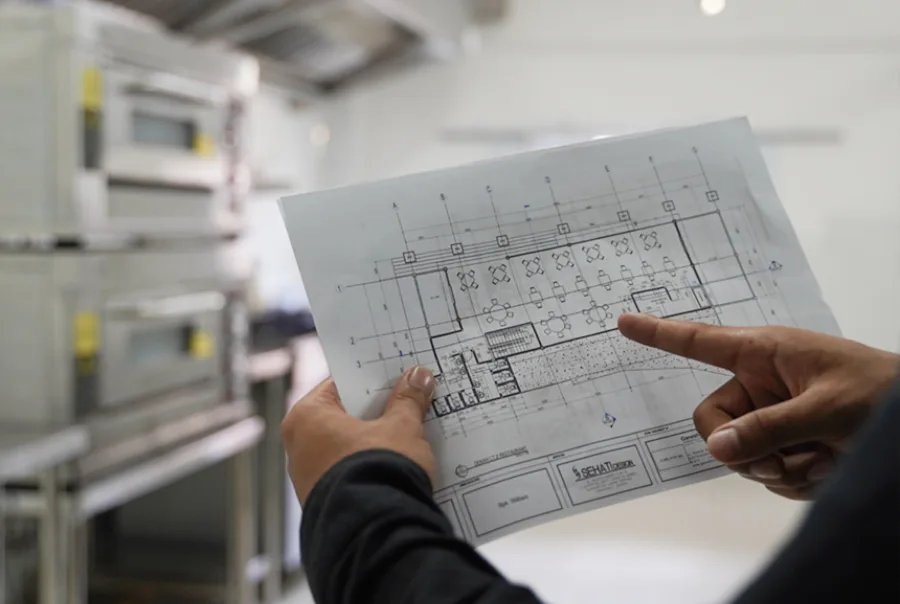
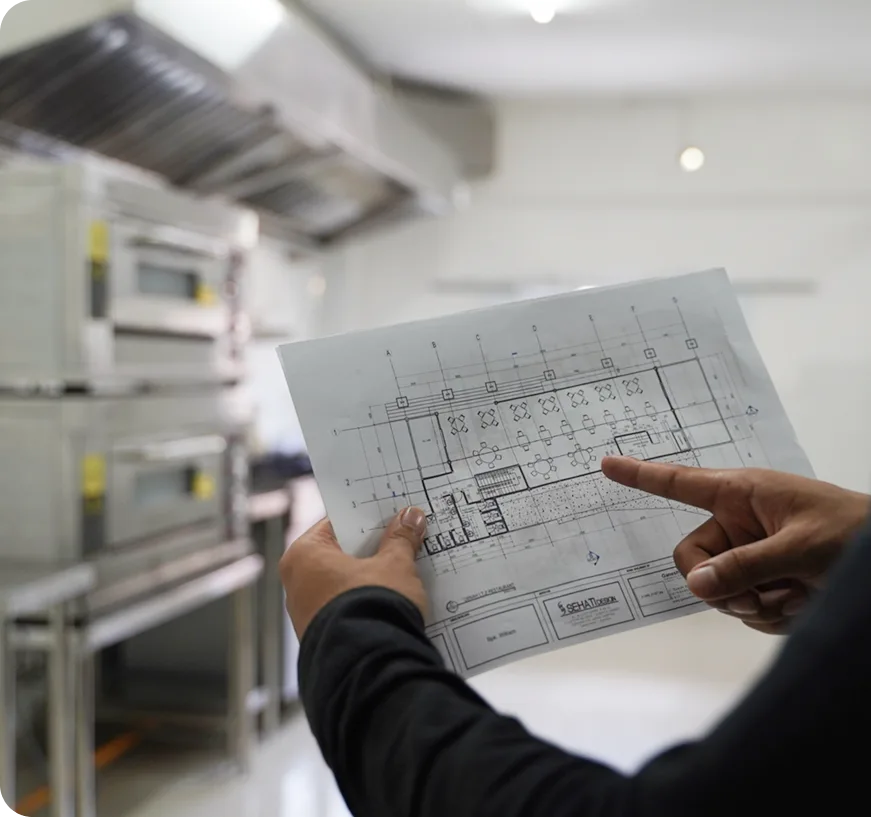
The third stage is the alignment of menu architecture with the physical kitchen, and it is the stage almost every emotionally-designed menu ignores until it is too late. A menu is a set of instructions issued to a fixed piece of production infrastructure, and if the instructions exceed the line's capacity, margin dies in slow ticket times, comped tables, and blown labour hours. The correlation is direct: dish complexity must match line capacity. In practice, that means:
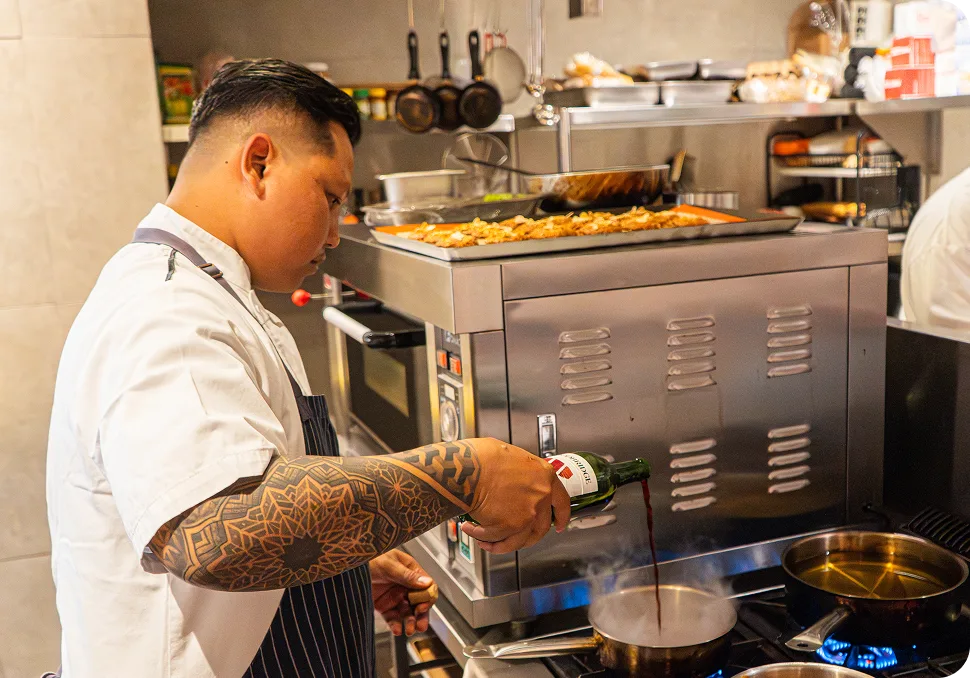
- The number of à la minute, high-skill dishes must be balanced against the number of stations and hands on the line, so that a full section of the card does not funnel every ticket through a single bottleneck station during peak covers.
- Prep-heavy components should be engineered toward mise-en-place that holds, so the line assembles rather than manufactures under pressure, protecting ticket times when the room is full.
The menu's spread of cooking methods must map to the actual equipment footprint, so that the commercial kitchen layout — the placement of the grill, the fryer, the pass, the cold section — supports the card's demand pattern rather than fighting it.

The Operational Reality
Here is the truth that a packed dining room hides: a full restaurant with an unoptimized menu is often less profitable than a two-thirds-full restaurant with an engineered one. Front-of-house volume feels like success, and it masks the leak for a long time, because revenue is rising even as margin quietly falls. But a busy service running a card full of Plough-horses and Dogs, buying single-use ingredients, and pushing complex plates through an undersized line is converting effort into covers without converting covers into profit. The kitchen works harder every night to make less money, and the owner mistakes exhaustion for growth.
This is why margin cannot be recovered on the floor. No amount of table-turning, upselling, or service polish fixes a menu that was costed wrong and built to fight its own kitchen. The leak is structural, designed into the card and the line before the first guest arrived, and it can only be sealed by re-engineering the instrument itself — which is precisely why disciplined menu engineering sits at the center of any serious restaurant consulting in Bali engagement. In the Indonesian market — where import costs move ingredient prices, where competition compresses pricing, and where a new concept opens every week — that structural discipline is not a refinement for mature operators. It is the entry condition for surviving the first two years.
The operators who build durable, profitable restaurants in Bali are not the ones with the most inspired dishes. Plenty of brilliant food closes. They are the ones who treat the menu as an engineered system — a matrix that steers demand toward Stars, a cross-utilization network that drives ingredient yield toward total, and an architecture that respects what the line can actually produce under load. That is the cold math beneath the hospitality, and it is the work that turns a talented kitchen into a business that lasts.