The changing landscape of property
The profile of the guest walking into a top-tier Indonesian property has changed, and the capital structure of the industry has not fully caught up. A decade ago, a plunge pool, a rice-paddy view, and a marble bathroom were enough to command a premium rate.
Today's high-net-worth traveller arrives having already stayed at the best properties in the world, and their expectation is no longer aesthetic — it is operational. They notice when a butler double-books, when in-villa dining arrives twenty minutes cold, when the spa cannot accommodate a same-day request, when the arrival sequence exposes them to other guests. In Indonesia's complex market, where land, permitting, imported materials, and staffing depth all carry friction that developed markets do not impose, this shift raises the stakes considerably.
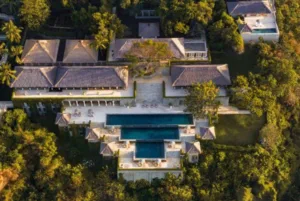
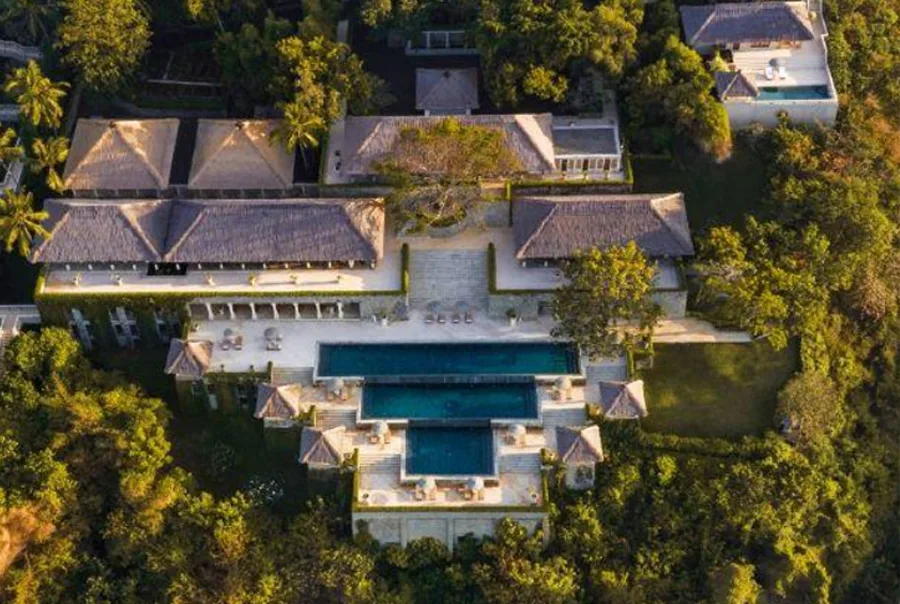
The properties commanding the highest rates in the luxury resorts Bali category are not the ones with the most expensive finishes. They are the ones where the physical asset and the operating model were designed as a single instrument. That is the central discipline this analysis is concerned with.
A successful luxury project is not an architectural achievement that later hires an operator. It is a disciplined roadmap that bridges the gap between raw architecture and daily operation from the first site plan onward — where every design decision is stress-tested against the service reality it will have to support for the next twenty years.
Treated this way, true luxury reveals itself as an operational framework, not a materials schedule. The finishes are the visible ten per cent. The framework underneath is what preserves the asset's value and protects its yield.
The Core Pillars of Modern Resort Design
For developers and institutional investors underwriting these projects, the difference between a trophy asset and a performing one comes down to a small number of technical decisions made early, when they are still cheap to change. Four pillars carry disproportionate weight.
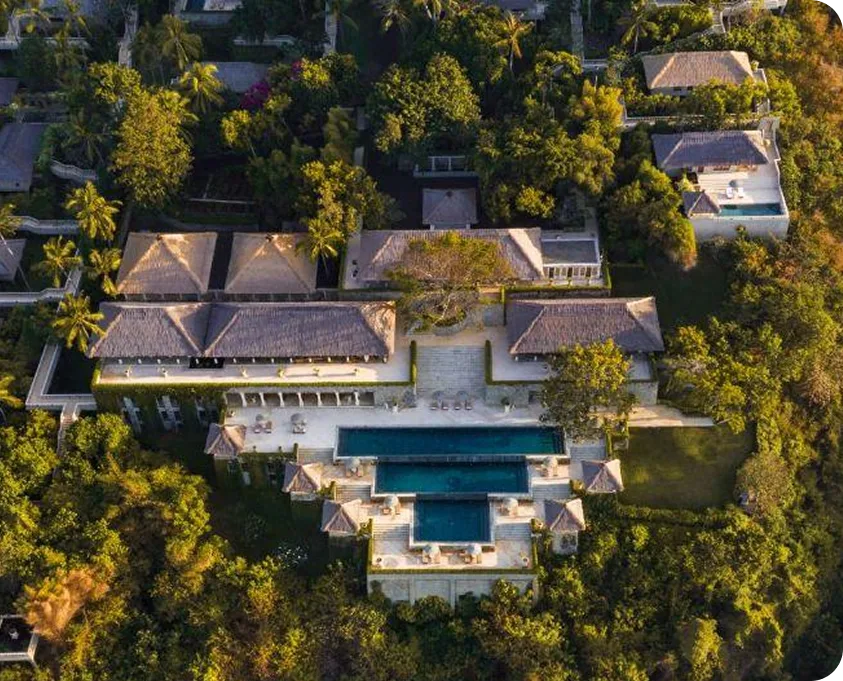
- Spatial intelligence and front-of-house zoning protect the product you are actually selling, which is privacy. At the ultra-premium tier, the guest is paying for the sensation of having the place to themselves. That sensation is engineered through circulation planning — arrival courts that decouple check-in from public sightlines, villa clusters oriented so no terrace overlooks another, and service routes deliberately separated from guest paths so housekeeping and F&B runners are never seen crossing the experience. When zoning is treated as an afterthought, no volume of expensive stone recovers the loss; the guest simply feels exposed, and a property that feels exposed cannot hold a premium rate.
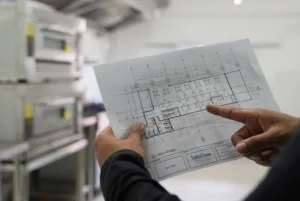
- The hidden infrastructure of back-of-house flow determines whether service is seamless or perpetually late. Guests never see the loading dock, the central kitchen, the laundry, the staff spine — and that is precisely why these are the first things value-engineered out or under-sized. The cost surfaces every day thereafter. If the distance from the production kitchen to the furthest villa demands a fifteen-minute transit, in-villa dining is structurally compromised regardless of how good the chef is. Back-of-house flow is not a cost center to minimize; it is the delivery mechanism for the entire guest promise, and its geometry has to be resolved on the drawing board because it is effectively impossible to retrofit once the property is vertical.
- Operational flexibility across food, beverage, and wellness touchpoints is where yield is won or lost. A restaurant designed for a single fixed service cannot flex to breakfast volume, private events, and late-night covers without labor waste or guest friction. A spa built with too few treatment rooms caps a high-margin revenue line permanently. The properties that manage yield well design these touchpoints to be reconfigurable — spaces that convert between day and evening use, kitchens sized for realistic peak throughput rather than average, wellness capacity matched to occupancy forecasts rather than to a rendering. Flexibility built in at design stage is flexibility that compounds across every season the asset operates.
- The integration of technology and staffing model into the physical plan is the pillar most often overlooked. Service standards depend on how quickly staff can respond, and response time is a function of where staff are stationed, how the property is wired, and how many square meters each team member must cover. A layout that looks efficient on paper but forces the service brigade to walk kilometers per shift will either degrade the experience or inflate the labor line beyond what the rate can support. This is where boutique hotel development in Indonesia either succeeds quietly or fails expensively.
None of these pillars is visible in a marketing photograph. All of them are visible on the profit-and-loss statement within the first year.
The Operator’s Warning
The most expensive mistakes in this sector are not made during construction. They are designed in during planning, and they are paid for during operation. An architectural decision that ignores daily service logistics does not announce itself as an error — the building still stands, the renders still look beautiful — but it imposes a permanent operating tax that no amount of skilled management can fully offset.
Consider the mechanics. A kitchen positioned for architectural symmetry rather than service adjacency adds minutes to every plate, which compounds into slower covers, higher labour hours, and diminished guest satisfaction for the life of the asset. A wellness facility under-built by two treatment rooms forfeits margin every single day at full occupancy. A staff corridor omitted to preserve a sightline forces service traffic through guest space, quietly eroding the privacy the entire rate structure depends on. These are not maintenance issues that can be scheduled and resolved. They are structural, and structural errors in a vertical building are corrected only through capital expenditure that was never budgeted.
The financial bleed is most acute — and most avoidable — during pre-opening. Hotel pre-opening setup is the phase where design assumptions collide with operational reality, and where a lack of discipline converts directly into burned capital. Common failures cluster in predictable places, and each one has a number attached to it:
- Recruiting and training a full team against an opening date that the construction schedule cannot actually meet puts a fully-loaded payroll on the books for months before a single revenue-generating guest arrives. Every week of slippage is staff cost with zero offset.
- Ordering operating equipment and FF&E without a procurement plan calibrated to Indonesia's import timelines and duties produces either crippling delays or panic buying at inflated cost, both of which hit the pre-opening budget directly.

- Writing standard operating procedures after the building is finished rather than designing them alongside it means the team discovers the layout's constraints in real time, in front of paying guests, during the most reputation-sensitive window the property will ever have.
- Underestimating the ramp-up curve — assuming stabilised occupancy and rate far earlier than the market delivers — starves the operation of working capital exactly when it is most fragile.
Each of these is a planning failure that surfaces as a financial one. And each is preventable with a structured framework that sequences design, procurement, recruitment, training, and systems in the correct order, against a realistic timeline, before the first guest is ever booked.

From Asset to Performing Asset
The through-line across every pillar and every warning is the same: in luxury hospitality, the physical asset and the operating model are not two projects to be coordinated. They are one project that must be conceived together. The developers who understand this stop asking "how do we make it beautiful?" and start asking "how does this building perform under load, every day, for two decades?" That reframing is what separates a property that opens loud and struggles quietly from one that opens well and holds its value.
For the institutional investor, the strategic implication is straightforward. Underwriting a luxury resort in Bali on the strength of its architecture alone is underwriting half the asset. The other half — the half that actually determines yield, guest retention, and long-term value — lives in the operational framework, and it has to be engineered with the same rigor and the same discipline as the structure itself. This is precisely the work that experienced hospitality consultants exist to de-risk: translating design intent into an operating reality that protects capital rather than quietly consuming it.